Same metal, two processes
Both processes protect steel with a zinc layer. In hot-dip galvanizing the part is immersed in molten zinc and the coating is thick. In electro-galvanizing zinc is deposited by electrolysis, without heating the part, and the coating is thin and controlled — on the FORTZA line in Mediaș typically between 5 and 18 µm.
Where will the part work?
For structures directly exposed to weather or aggressive environments, hot-dip galvanizing is usually the right choice. For indoor use, sheltered outdoor use, or parts that receive additional finishing, electro-galvanizing gives good protection with a much thinner layer.
Threads, fits and tolerances
A thick coating can block threads, fits and seating surfaces. Electro-galvanizing adds only a few microns, so it is preferred for parts with tight tolerances.
Distortion
Immersion in molten zinc can distort thin or asymmetrically welded parts. Electro-galvanizing does not heat the part, so there is no thermal distortion.
Size of the part
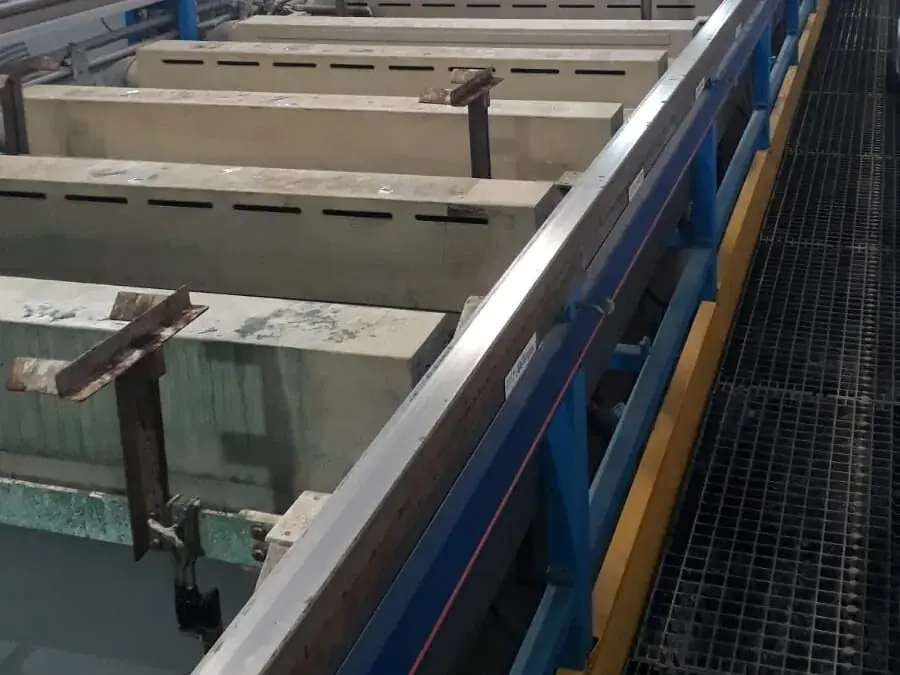
Electro-galvanizing works on frames in tanks. On our line the zinc tank measures 1700 × 500 × 1000 mm, which suits small and medium parts, brackets, housings and sub-assemblies.
In short
Choose by service environment, tolerances and appearance. If you are unsure, send the drawing and a description of where the part will be used, and we will tell you whether electro-galvanizing is suitable.
General information. Configuration, price, lead times and regulatory requirements are confirmed per project with FORTZA and the competent authorities.
FZ-04 Steel processing & fabrication